Tire Health Checks You Can Do Yourself
Don't wait for a mechanic to spot problems. We'll show you simple checks for tread depth, pressure, and wear patterns that reveal what your tires are telling you.
Why You Need to Check Your Tires
Your tires are literally where the rubber meets the road. They're the only thing between your car and the pavement, yet most of us ignore them until something goes wrong. Here's the thing — tires give you plenty of warning signs before they fail. You just need to know what to look for.
A few minutes of checking every month can save you from a blowout on the highway, uneven wear that costs you hundreds in premature replacement, or worse — an accident. We're not talking about anything complicated. These are checks you can do in your driveway with tools you probably already have.
The Penny Test for Tread Depth
The most basic check you can do takes about 10 seconds per tire. It's called the penny test, and it's been around for years because it actually works.
Here's how it goes: Take a penny and insert it headfirst into the tread groove. If you can see the top of Lincoln's head, your tread's too shallow and you need new tires. If the top of his head is covered by the tread, you're still good.
The legal minimum tread depth in most places is 2/32 of an inch. That penny test tells you if you're below that. But honestly? We'd recommend replacing tires around 4/32 of an inch if you drive in rain regularly. That's when wet braking performance really starts to drop.
Check at least 3-4 spots on each tire, not just one. Tread can wear unevenly, and you want the worst spot to pass the test, not the best.

Pressure Matters More Than You Think
Under-inflated tires are a silent killer. They cause heat buildup, premature wear on the outer edges, poor fuel economy, and reduced handling. Over-inflated tires wear faster in the center and give you a rougher ride.
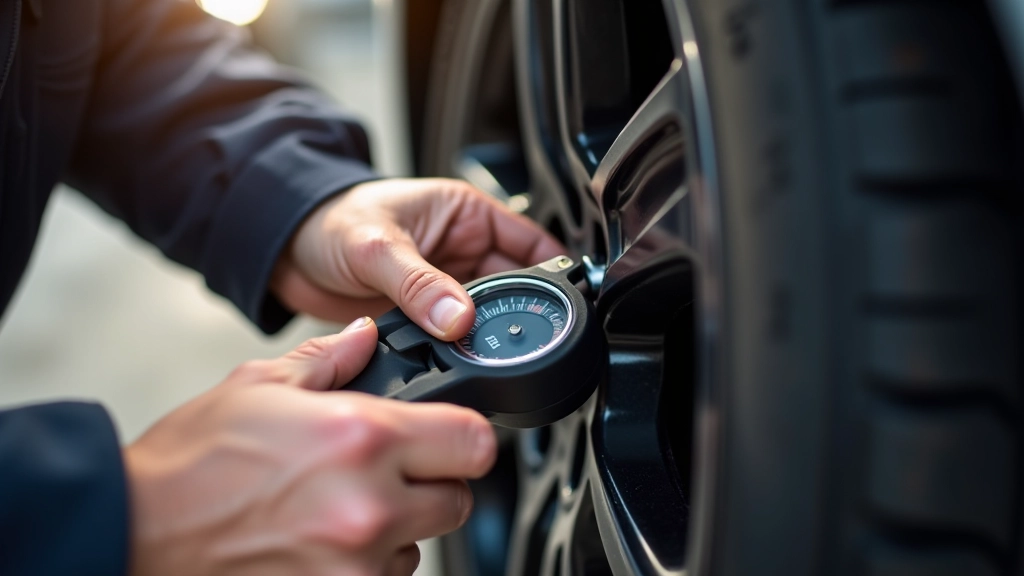
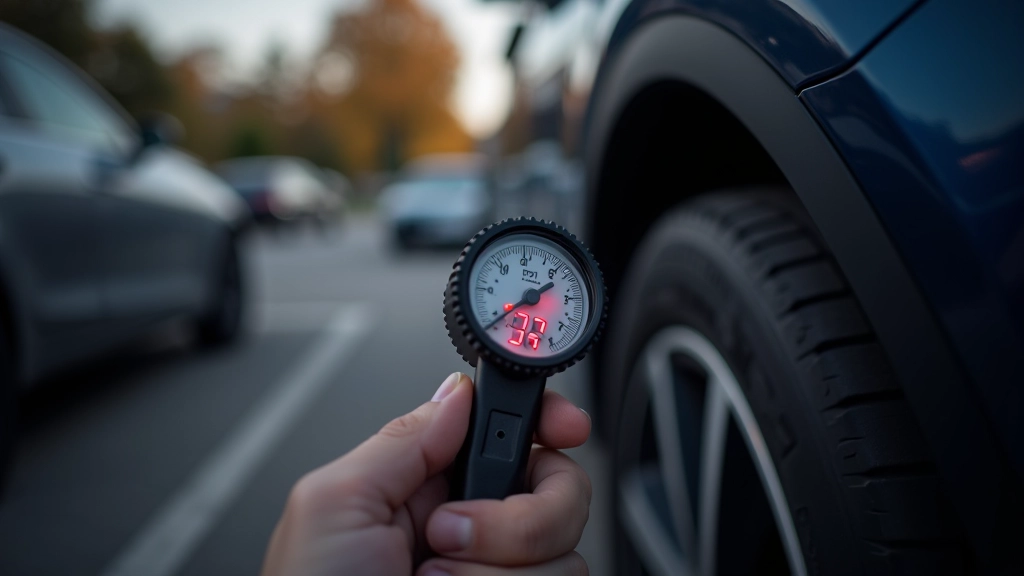
You'll need a tire pressure gauge for this one. They're cheap — $10-15 for a decent one. Check your tire pressure when the tires are cold, meaning you haven't driven more than a couple miles or it's been at least 3 hours since you last drove.
Your car's correct tire pressure isn't on the tire itself. Don't use that number — it's the maximum, not the recommended. Look inside your driver's side door jamb or in your owner's manual. That's the real number. Most cars run between 30-35 PSI.
Check pressure monthly. Temperature changes affect it — tires can lose or gain a PSI or two with seasonal shifts. Spend 5 minutes on this and you'll notice your car handles better and your tires last longer.
Important Note
This article provides educational information about tire inspection. While these checks are helpful for basic maintenance, they're not a substitute for professional tire inspection by a certified technician. If you notice any significant damage, uneven wear patterns, bulges, or if you're unsure about your tire condition, have them inspected by a professional immediately. Your safety depends on properly functioning tires.
Reading the Wear Patterns
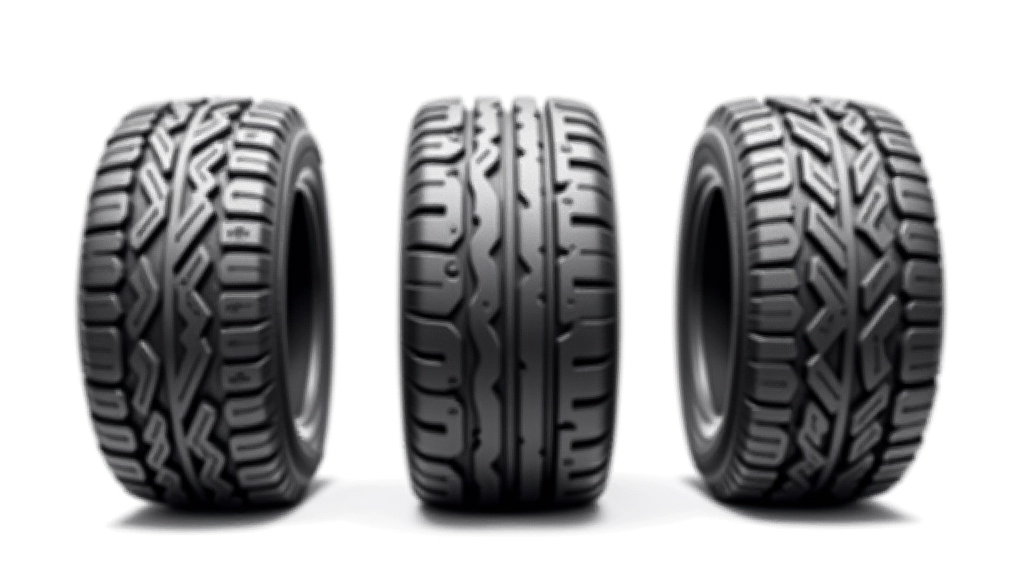
Your tires tell stories. The way they wear shows you what's happening with alignment, suspension, and driving habits. Learning to read these patterns is like having a conversation with your car.
Center Wear
Tread is worn mostly in the middle. This means over-inflation. Those extra pounds of pressure are pushing the center of the tire harder against the road. Solution: Check and adjust your pressure.
Edge Wear
Both outer edges are wearing faster than the center. Under-inflation is the usual culprit. The sidewalls flex more when there's not enough air, causing the shoulders to drag. This is also the wear pattern you'll see if your alignment is way off.
One-Sided Wear
Only one edge is wearing fast. This almost always means alignment issues. Your wheels aren't pointing straight, so they're scrubbing sideways as you drive. This one you can't fix yourself — you need an alignment specialist.
Visual Inspection for Damage
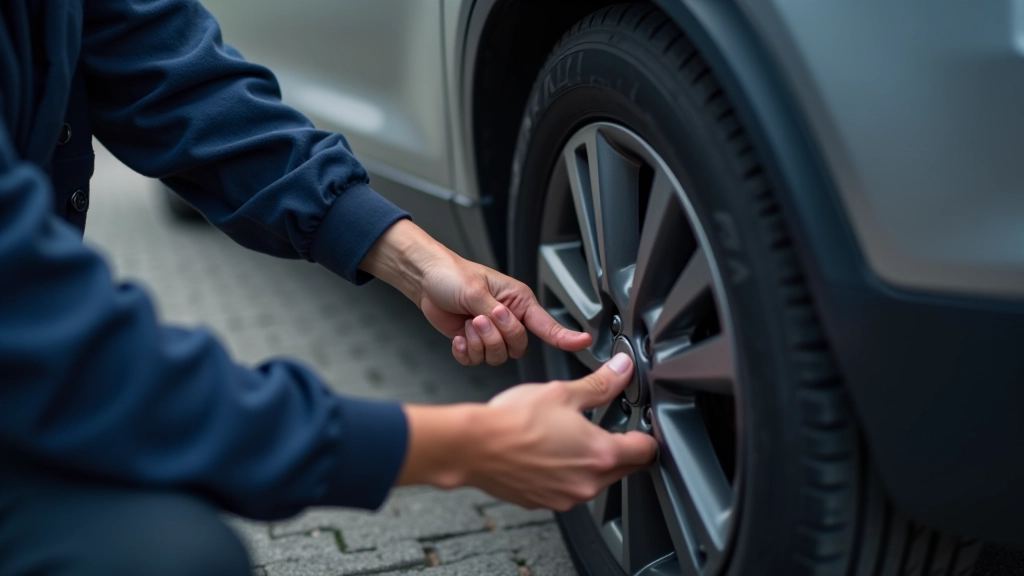
Beyond tread and pressure, you need to look for damage that means the tire's integrity is compromised. This is the stuff you can't fix — these tires need replacing.
Run your hand around the sidewall of each tire. Feel for bulges or blisters. These happen when the internal structure is damaged, usually from hitting a pothole hard or from age. A bulge means the tire will fail. Don't risk it.
Look for cracks in the sidewall or tread. Small surface cracks from age and UV exposure aren't emergency situations, but deep cracks that go into the rubber structure need attention. Check the valve stem too — if it's cracked or leaking, that's an easy fix at any tire shop.
Watch for cuts, punctures, or objects stuck in the tread. Small punctures (less than 1/4 inch) in the tread area can sometimes be patched, but if it's on the sidewall or the puncture's too large, replacement is the only option.
Making a Simple Maintenance Routine
You don't need much to stay on top of tire health. A pressure gauge (one-time $10-15 investment), a penny, and 10 minutes once a month. That's it.
Set a reminder on your phone for the first of every month. When it goes off, grab your gauge and penny. Check pressure on all four tires and the spare if you can access it. Do the penny test at 3-4 spots per tire. Look over the sidewalls and tread for anything unusual. Write down your pressure readings if you want to track trends over time.
If you notice anything concerning — bulges, cuts, uneven wear, pressure that keeps dropping — don't wait. Get them checked by a professional. We run a tire shop here in Prague that can inspect them properly and replace them if needed. The cost of a professional inspection now beats dealing with a blowout on the highway or replacing all four tires prematurely because of neglect.

Related Articles